



Political campaigns today are increasingly shaped by data, technology, field intelligence and disciplined execution. While voters often see the public side of an election through speeches, rallies and campaign messages, a significant amount of work takes place behind the scenes to help campaign teams understand constituencies, monitor feedback and organise resources effectively.
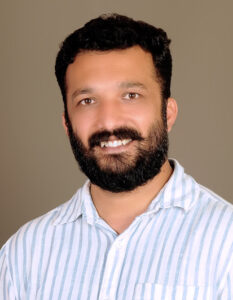
For political strategist and senior campaign professional Sharath Kumar D., this behind-the-scenes work has been an important part of his professional journey spanning more than 13 years.
Over the years, Sharath has been associated with professional political campaign teams, working across different geographies and electoral environments. His responsibilities have included data strategy, campaign coordination, field intelligence and war-room operations.
Understanding Campaigns Through Data
Modern political campaigns generate large volumes of information. Voter feedback, constituency-level trends, field reports, campaign activities and communication responses can all contribute to a broader understanding of the political environment.
Sharath’s approach focuses on bringing these different information sources together in a structured manner.
A campaign war room, in his view, is not simply a place where numbers are displayed on screens. It is a system that helps campaign teams organise information, identify priorities and respond to developments on the ground.
The process often involves several stages:
Data → Intelligence → Strategy → Execution → Feedback → Correction
This continuous cycle allows campaign teams to review their approach and make adjustments based on changing circumstances.
Experience Across Different Campaign Environments
Sharath has worked with campaign teams in different political and geographical settings, including assignments associated with Tamil Nadu and Bihar.
Each campaign presented its own set of challenges. Different constituencies have different political histories, voter expectations, organisational structures and local issues. As a result, a campaign strategy cannot always follow a single template.
In Tamil Nadu, his experience involved working within a large-scale political campaign environment where constituency-level information and organisational coordination were important components of campaign planning.
The scale required teams to manage information across multiple constituencies while maintaining coordination between different layers of the campaign organisation.
In Bihar, his work involved a more focused constituency-level campaign environment. With a shorter campaign period, the emphasis was on quickly understanding the local political landscape, analysing field feedback and identifying areas requiring greater organisational attention.
The two experiences demonstrated an important lesson for Sharath: campaign strategy has to adapt to the size, structure and circumstances of each electoral contest.
The Role of the War Room
A professional campaign war room acts as a coordination centre.
Its role can include monitoring field reports, organising constituency information, tracking campaign activities and ensuring that important feedback reaches the appropriate teams.
However, data alone cannot determine the success of a campaign.
A dashboard may indicate one situation, while conversations with local teams may reveal another. Similarly, a communication strategy that performs well online may not necessarily have the same relevance at the grassroots level.
This is why Sharath believes that data and field intelligence must work together.
The objective is not simply to collect information, but to turn information into useful insights that campaign teams can act upon.
Connecting Data With Ground Reality
One of the key aspects of political campaign management is maintaining a connection between analytical teams and field teams.
Field workers interact directly with communities and often provide information that cannot be captured through numerical data alone. Their observations can help campaign teams understand local concerns, organisational challenges and changing voter conversations.
For Sharath, combining these perspectives is essential.
Data can indicate where attention may be required. Field intelligence can help explain why. Strategy can then determine the next step.
This approach makes campaign management a continuous process rather than a one-time exercise.
What Happens Behind the Scenes
Election campaigns are often associated with candidates and public events. However, professional campaign operations involve numerous people working across different functions.
Analysts study information.
Field teams collect feedback.
Campaign managers coordinate activities.
Communication teams develop messaging.
Leadership teams review priorities.
The war room connects many of these functions and helps maintain a common direction.
Sharath’s experience has largely been in this professional ecosystem, where the focus is on connecting different parts of a campaign and ensuring that information moves efficiently between teams.
Lessons From More Than 13 Years
After more than 13 years of working in political strategy and campaign environments, Sharath believes there is no single formula that can guarantee an electoral outcome.
Instead, successful campaign management requires preparation, adaptability, teamwork and a clear understanding of the constituency.
His professional philosophy can be summarised through a few basic principles:
Know the constituency.
Understand the voter.
Study the available data.
Listen to the field.
Build strong teams.
Adapt when circumstances change.
Political campaigns continue to evolve as technology becomes more integrated into organisational and communication processes. Yet, according to Sharath, the importance of understanding people and local realities remains unchanged.
For him, the most valuable role of technology and data is not to replace human understanding, but to help campaign teams make better-informed decisions.
From large campaign operations to focused constituency-level assignments, his journey reflects the growing importance of professional campaign management in contemporary politics.
Behind every campaign is a network of people working on research, organisation, communication, data and execution. Sharath Kumar D.’s experience offers a perspective into this lesser-seen side of political campaigning—where information is converted into intelligence, intelligence supports strategy, and strategy guides execution.
— Sharath Kumar D.
Senior Political Consultant | Political Strategist | Data & Campaign Team Lead