


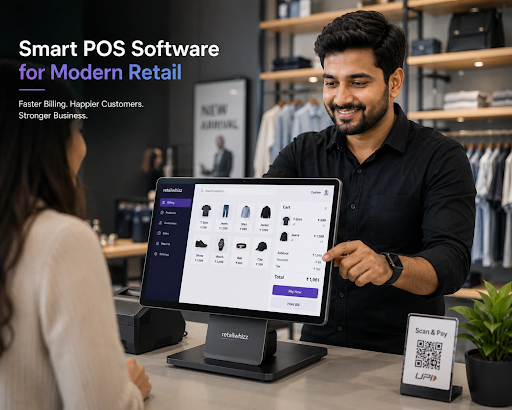
The retail industry has undergone significant transformation over the past decade. Rising customer expectations, growing competition, and the increasing complexity of managing inventory, sales, and customer relationships have pushed retailers to adopt smarter technologies.
At the center of this transformation is the Point of Sale (POS) system. Once viewed primarily as a billing tool, modern POS platforms have evolved into powerful business management solutions that help retailers gain real-time visibility, improve operational efficiency, and deliver better customer experiences.
As retail businesses continue to expand across multiple channels and locations, integrated POS systems are becoming a critical component of successful retail operations.
The Evolution of Retail POS Systems
Traditional POS systems were designed to process transactions and generate receipts. While effective for basic billing functions, they often operated independently from inventory management, procurement, customer relationship management, and reporting systems.
This created several operational challenges:
- Limited visibility into inventory levels
- Delayed reporting and analytics
- Manual reconciliation processes
- Inconsistent customer data
- Difficulty managing multiple store locations
- Limited support for loyalty and promotional programs
Today’s retailers require more than a transaction processing tool. They need a centralized platform that connects various aspects of their business and provides actionable insights in real time.
Why Integration Matters
An integrated POS system serves as the operational hub of a retail business. It connects sales, inventory, procurement, customer data, promotions, and reporting into a unified ecosystem.
This integration provides several benefits:
Real-Time Inventory Visibility
Every transaction automatically updates inventory levels, helping retailers maintain accurate stock records and reduce stock discrepancies.
Faster Decision-Making
Business owners and managers gain access to live sales data, product performance metrics, and operational insights that support timely decisions.
Improved Customer Experience
Integrated systems help retailers process transactions faster, manage returns efficiently, and personalize customer interactions.
Better Multi-Store Management
Retail chains can monitor performance across locations from a centralized dashboard while maintaining operational consistency.
Industry experts increasingly view POS integration as a foundational requirement for modern retail operations because it eliminates data silos and improves overall business efficiency.
Customer Loyalty Requires More Than Discounts
Today’s consumers expect personalized experiences and meaningful engagement from the brands they choose. Simply offering discounts is often not enough to encourage repeat purchases.
Retailers are increasingly implementing customer retention strategies powered by technology-driven loyalty programs.
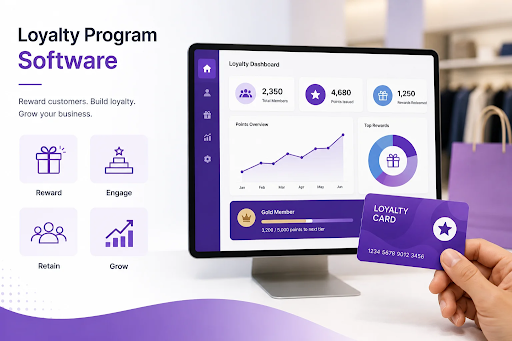
An effective loyalty program software solution enables businesses to reward customers, track purchasing behavior, create targeted promotions, and strengthen long-term customer relationships.
When loyalty management is integrated directly with the POS system, retailers can gain deeper insights into customer preferences while delivering more relevant offers and rewards.
This integration helps improve customer retention and increase lifetime customer value.
The Role of POS in Retail Growth
As retail businesses grow, operational complexity increases. Managing inventory, sales, customer engagement, procurement, and reporting through disconnected systems can create inefficiencies that limit scalability.
Modern retail POS software provides retailers with a centralized platform that supports growth while maintaining operational control.
Key advantages include:
- Real-time sales monitoring
- Inventory synchronization
- Centralized reporting
- Faster billing operations
- Better customer insights
- Enhanced promotional management
- Improved operational efficiency
By integrating these functions into a single platform, retailers can reduce administrative workload and focus more on strategic growth initiatives.
The RetailWhizz Perspective
As retailers continue their digital transformation journey, technology solutions must evolve beyond standalone systems and support connected business operations.
RetailWhizz has been helping retailers modernize operations through ERP-driven retail management solutions that integrate POS, inventory management, procurement, analytics, and customer engagement into a unified platform.
By enabling real-time visibility across critical business functions, RetailWhizz helps retailers improve decision-making, optimize inventory performance, and create more efficient operational workflows.
The company’s approach focuses on helping retailers build scalable systems that support both day-to-day operations and long-term business growth.
Looking Ahead
The future of retail will be defined by businesses that can operate efficiently while delivering exceptional customer experiences. Integrated POS systems are no longer optional—they have become essential tools for retailers seeking greater visibility, operational control, and customer engagement.
As competition continues to intensify, retailers that invest in connected technology ecosystems will be better positioned to improve profitability, strengthen customer loyalty, and adapt to changing market demands.
For modern retailers, the POS system is no longer just a checkout solution—it is the foundation of a smarter, more connected retail business.