


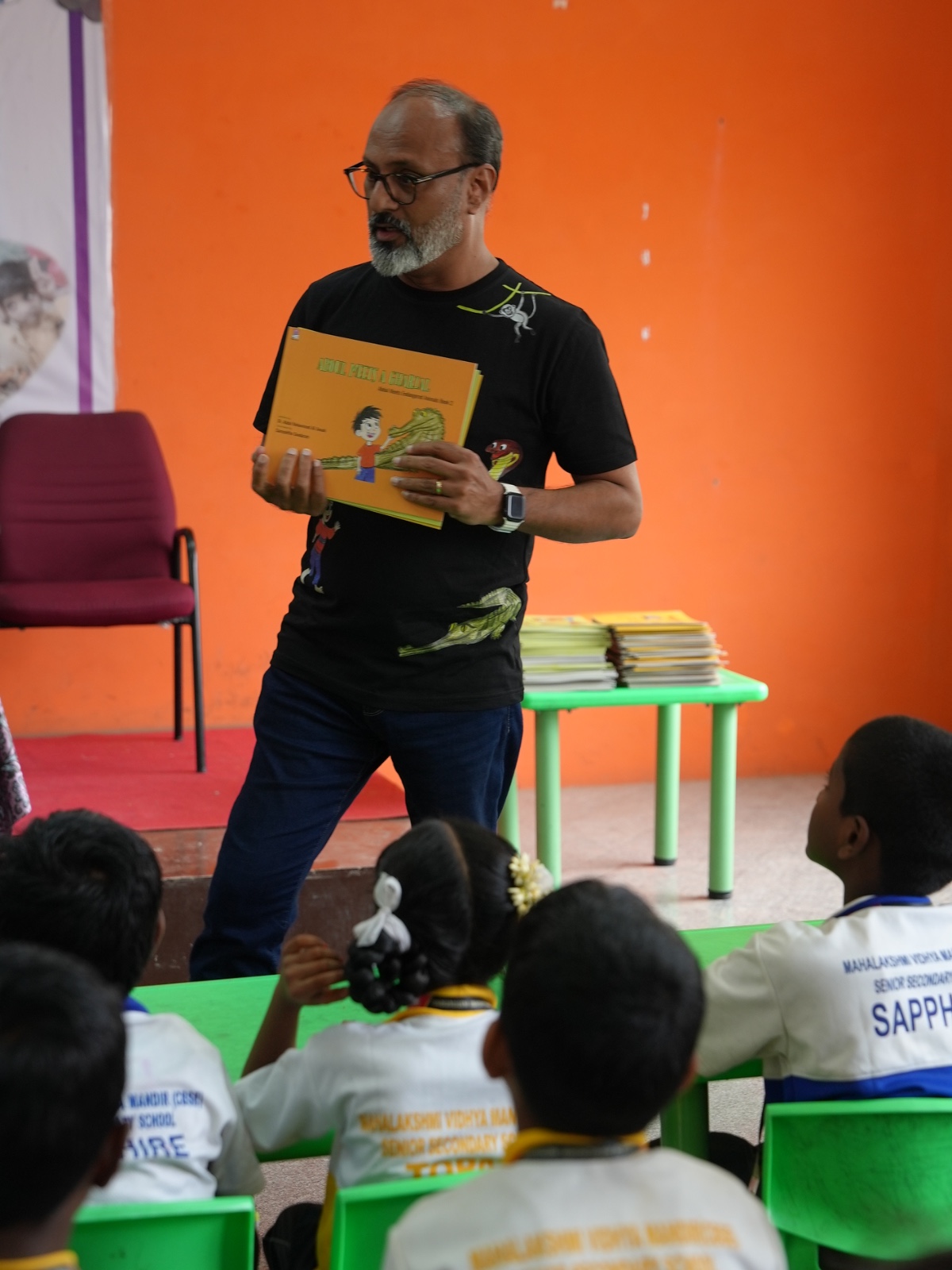
When we think of storytellers, the image of a professor lecturing in a classroom rarely comes to mind. Yet, Professor Dr. Abdul Mohammed Ali Jinnah, who teaches at Jamal Mohamed College in Tiruchirappalli, has successfully blended these two worlds. His journey into writing children’s books was not a planned one. After listening to his tales, Pachyderm Tales encouraged him to bring them out of the classroom and into published books. This spark gave birth to a unique ecological storytelling initiative.
From the very beginning, Dr. Jinnah harbored a desire to write stories that would instill ecological awareness in children. Growing up fascinated by animals, he often thought of starting a Prakriti series—a literary collection dedicated to nature and conservation. What began as a vague aspiration materialized into a structured project called “Abdul Meets Endangered Animals.”
The first set of stories in this series focused on five animals deeply rooted in Indian culture yet facing extinction: the Gharial, the King Cobra, the Langur, the Nilgiri Tahr, and the Great Indian Bustard. Dr. Jinnah later added two more species to this list, making it seven in total. His ultimate vision, however, is ambitious—he aims to expand the series to at least 30 books, covering a wide variety of endangered species that children in India often remain unaware of.
Why children’s books? Dr. Jinnah firmly believes that ecological consciousness must be nurtured early. Most Indian children, he observes, know about exotic animals like Australian crocodiles but remain unaware of native species like the Gharial, which inhabits the Ganges. These books serve as a bridge between children and India’s own wildlife heritage. Through storytelling, he creates an emotional connection that goes beyond statistics and scientific reports.
Interestingly, the protagonist of these stories is named Abdul, after himself. Initially, this choice was unplanned. It was Pachyderm Tales who suggested that the child hero should represent a minority voice, something not often seen in children’s ecological literature. Over time, Dr. Jinnah found himself reflected in the character—sharing interests, concerns, and cultural connections with the natural world. In one of the books, he even weaves in a historical character to enrich the narrative, though he chooses to keep details under wraps for now.
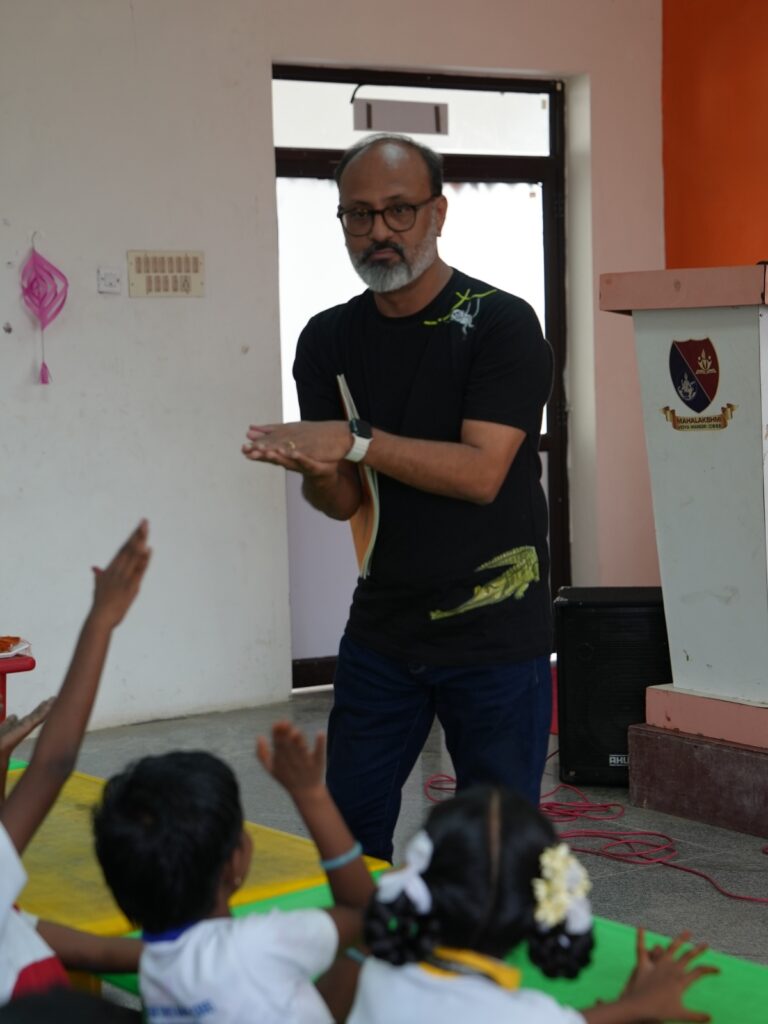
The ecological message is clear: conservation is not just about animals but about preserving cultural identity and natural heritage. By situating his protagonist within Indian traditions and landscapes, Dr. Jinnah emphasizes that endangered species are part of our collective memory and responsibility.
This series is not his first attempt at ecology-driven storytelling. Earlier, he worked on the Ananth Series, which introduced African wildlife to children through stories paired with striking photography. While the Ananth Series was impactful, it relied heavily on international species such as cheetahs, African elephants, and giraffes. In contrast, “Abdul Meets Endangered Animals” marks a shift towards highlighting India’s own ecological treasures.
What makes Dr. Jinnah’s work stand out is not only his passion for ecology but also his commitment to storytelling as pedagogy. As a professor, he continues to teach postmodern theory, but he sees children’s literature as a practical application of these ideas—a way of situating himself in lived praxis.
His books may appear simple tales on the surface, but at their heart, they are ecological manifestos disguised as stories. By making a child the protagonist, he ensures that the books remain relatable and accessible while addressing pressing environmental challenges.
Through this unique blend of academia, storytelling, and ecological urgency, Dr. Jinnah has carved out a distinct niche for himself. His mission is clear—to use the power of stories to save India’s endangered animals and, in doing so, to nurture the next generation of conservationists.
Please Visit for More information : http://www.pachydermtales.org/